
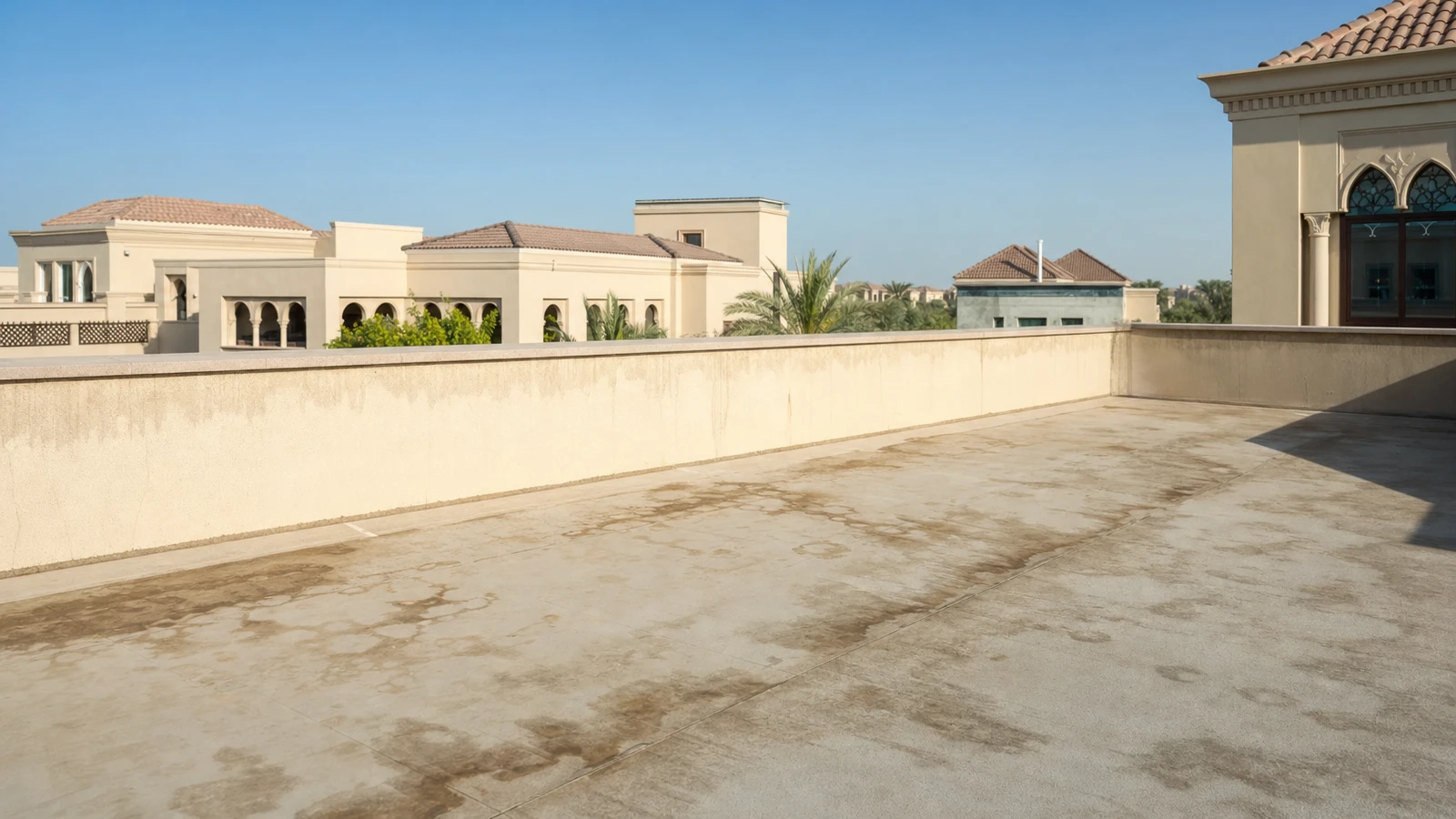
In Dubai, who pays for a roof leak depends on the specific situation: whether you’re a tenant, landlord, homeowner, or part of an owners association. Each has different responsibilities.
Landlord vs. Tenant: Who Handles Roof Repairs?
Roof leaks can cause serious headaches, but who picks up the tab for repairs? In Dubai, the answer usually hinges on your tenancy contract. It’s crucial to understand these terms to avoid unexpected costs.
- Landlord responsibilities. Generally, landlords are accountable for major repairs, including structural and roof maintenance, unless your contract states otherwise. Dubai Law 26 of 2007 generally places these duties on landlords, but the specifics can vary by contract. Roof repairs often fall into the “major” category due to potential structural implications.
- Tenant obligations. Tenants typically cover minor repairs, usually defined by a specific cost threshold in the contract. This threshold often ranges between AED 500 to AED 1,000. For example, fixing a small leak might fall to the tenant if it’s under this limit, but larger issues like widespread water damage typically remain a landlord’s responsibility.
- Contract clauses matter. The key to understanding your obligations lies in the tenancy agreement itself. Contracts may have bespoke terms about what constitutes “major” versus “minor” repairs. Always check these clauses before proceeding with repairs or seeking reimbursement.
- Communication is essential. If a roof leak occurs, promptly notify the landlord. Delaying can exacerbate the damage, potentially complicating liability discussions. Landlords may also have preferred contractors for such repairs, aligning with warranty or insurance requirements.
- Documentation supports your case. Take photos and record dates of the issue and your communications. This documentation can be crucial if there’s a dispute over who should pay for the repairs.
In essence, while landlords usually handle major repairs, your specific contract will define responsibilities. Reviewing these details before issues arise can save you from unexpected expenses. When in doubt, consult with a legal professional to interpret your tenancy agreement correctly. This way, you’ll understand who shoulders the cost of roof repairs, whether it’s a minor patch or a significant overhaul.
Understanding Developer Liability for New Builds
Developer liability for new buildings in Dubai is shaped by the UAE Civil Transactions Law. This law typically defines a one-year liability for non-structural defects and a ten-year liability for structural defects from handover. Understanding where a roof problem falls within these categories is crucial for determining who pays for repairs.
Structural vs. Non-Structural Defects. A roof issue is considered a structural defect if it affects the building’s stability or safety. Examples include major cracks or structural weaknesses that threaten the integrity of the building. These are covered under the ten-year liability period. Non-structural defects, on the other hand, are those that do not compromise the building’s core structure, such as minor leaks or cosmetic issues, and fall under the one-year liability period.
Determining the Nature of a Defect. Identifying whether a roof problem is structural or non-structural often involves a detailed inspection. A structural defect might be indicated by significant water penetration that compromises the roof’s load-bearing capacity. Non-structural issues typically involve surface-level problems like minor waterproofing failures or cosmetic damages that do not impact the building’s fundamental safety.
- Inspection Importance. A thorough inspection can help differentiate between these defect types. This often involves assessing the extent of water damage, the presence of cracks, and the overall impact on the building’s safety and usability.
- Developer Responsibilities. If a problem is deemed structural, the developer is liable for repairs for up to ten years post-handover. This liability provides homeowners with recourse for major issues that arise within this period.
- Homeowner Actions. Homeowners should maintain records of inspections and any identified issues, as these can support claims under the developer’s liability. Engaging a professional inspection service like Shield Edge can provide the necessary documentation to substantiate a claim.
In summary, understanding whether a roof problem is a structural or non-structural defect influences who pays for repairs. Structural issues fall under the ten-year developer liability, whereas non-structural defects are the developer’s responsibility only for the first year. Accurate diagnosis through professional inspection can ensure that homeowners pursue the correct avenue for repair costs.
Owners Associations: Their Role in Roof Maintenance
Owners associations play a crucial role in maintaining shared roofs in villa communities. They are responsible for ensuring that common areas, including roofs, are kept in good condition. This responsibility is typically managed through service charges and sinking funds. Let’s break down how these elements work together.
- Service Charges. These are regular fees paid by property owners to the owners association. The funds collected cover routine maintenance and repair of common areas, including roofs. The amount varies depending on the community and the scope of services provided. Regular maintenance prevents minor issues from turning into major problems, saving money in the long run.
- Sinking Funds. These are reserves set aside specifically for major repairs or replacements. Roof repairs fall under this category, especially when they involve significant work or complete overhauls. Sinking funds are accumulated over time, ensuring that when a substantial repair is needed, the financial resources are available without requiring a sudden, large contribution from property owners.
Understanding the role of the owners association is vital for homeowners. It helps clarify who is responsible for maintenance and how these efforts are funded. Generally, the association will organise inspections and hire contractors to carry out the necessary work. This centralized approach ensures that roof maintenance is consistent and up to standard across the community.
- Communication. It’s essential for homeowners to maintain open communication with their owners association. Reporting issues promptly can prevent them from escalating. Owners should also review their association’s financial reports to understand how funds are allocated and spent.
- Participation. Homeowners have the right to attend association meetings and participate in decision-making processes. This involvement can influence how funds are spent and ensure that roof maintenance remains a priority.
In some cases, conflicts may arise if there’s a disagreement over the scope of repairs or the timing of maintenance. Homeowners should familiarize themselves with their association’s bylaws and maintenance policies. This knowledge can aid in resolving disputes and ensuring that the association fulfills its obligations.
Overall, the owners association is a key player in roof maintenance within villa communities. By understanding their role and the financial mechanisms in place, homeowners can better navigate their responsibilities and ensure that their investments are protected.
Insurance Coverage: What Policies Typically Cover
Home insurance can be a tricky maze, especially when dealing with roof leaks. Generally, policies separate damage into two main categories: sudden and accidental damage, and gradual wear and tear. Understanding the difference matters when you’re trying to figure out if you can claim for a leak.
Sudden and Accidental Damage. This includes unexpected incidents like a storm blowing off your roof tiles or a tree branch puncturing your roof membrane. Most insurance policies cover these incidents because they happen without warning and are beyond your control. If a recent storm caused a leak, you’re likely covered. Policies often require immediate reporting of such events to support your claim, so don’t delay.
Gradual Wear and Tear. Here’s where it gets tricky. If your roof leaks due to long-term neglect or deterioration, most policies won’t cover it. Think of small cracks that develop over years due to sun exposure. These are seen as maintenance issues, not insurable events. Insurers argue that homeowners should perform regular maintenance to prevent such problems. So, if a leak is due to wear and tear, it’s usually on you to fix it.
Policy Variations. Terms differ across insurers. Some might cover gradual damage if it results in sudden damage, like a small leak leading to ceiling collapse. Others might not. The wording in your policy is crucial. Look for terms like “all-risks” or “named perils” and see how they define covered events. Always check your specific policy details to know what’s covered.
Flood Damage Exclusions. Some policies exclude damage caused by flooding. If a heavy rainstorm leads to water pooling on your roof and seeping through, this could be classified under flood damage rather than storm damage. That’s another reason to know your policy’s fine print. If flood damage is excluded, any leak resulting from pooled water might not be covered.
Claim Process. If you believe your roof leak is covered, contact your insurer promptly. Document the damage with photos and notes. Most insurers have specific timelines for claim submission. Delays can jeopardize your claim, so act quickly. It’s also wise to have an inspection report ready, detailing the cause of the leak. This supports your claim’s legitimacy.
While insurance can offer a financial safety net, it’s not a blanket cover-all. Knowing the specifics of your policy is key. If in doubt, consult with your insurer or a professional to clarify your coverage. And remember, regular roof maintenance is your best defense against leaks not covered by insurance.
Roof Warranties: What They Cover and What They Don’t
Roof warranties seem like a safety net, but they have limits. They typically cover workmanship and installation issues, not material defects or external damage. Understanding these limitations can save you from unexpected costs down the line. Here’s a closer look at what’s usually included and what’s not.
- Workmanship warranty. This covers errors made during the installation process. If a roof leaks because it wasn’t installed correctly, the warranty should cover the repair. Shield Edge offers a 10-year workmanship warranty on roof waterproofing and heatproofing, which is generous in this market.
- Material defects. Not usually covered by installation warranties. Materials have their own manufacturer warranties. If a membrane fails due to a defect, you’ll need to claim against the manufacturer. Shield Edge will assist in such claims, but it’s a separate process.
- Exclusions for external damage. Most warranties won’t cover damage from storms, extreme weather, or acts of nature. Given Dubai’s rare but intense rainfall, this is crucial to know. The April 2024 storm, for instance, wouldn’t be covered under a typical workmanship warranty.
- Maintenance requirements. Some warranties require regular inspections to stay valid. Shield Edge’s warranty demands an annual check-in, either a short visual inspection or photos sent by the owner, to keep it active. This ensures any small issues are caught early before they become big problems.
- Transferability. Many warranties, including Shield Edge’s, are non-transferable. They are issued to the property owner at the time of installation. If you sell your home, the warranty doesn’t move with the property.
- Exclusions for third-party damage. Any damage caused by other contractors, unauthorized rooftop work, or neglect, such as blocked drains or misuse, is not covered. Always consult your warranty details before letting anyone onto your roof.
Understanding these elements is crucial for anyone holding a roof warranty. For more detailed guidance, check out our guide on reading roofing warranties in Dubai. It lays out what to look for and how to interpret the fine print.
Identifying the Source: Inspection and Correct Diagnosis
Finding the source of a roof leak is the first step in resolving it. Guesswork can lead to costly and ineffective repairs. A thorough inspection is crucial, and at Shield Edge, this means looking at the roof as a whole system. Skipping this step often results in misdiagnosis and repeated problems.
We start by assessing the roof’s safety and access points. Then, we check the overall slope and look for standing-water marks. These are key indicators of where water might be pooling, which often leads to leaks. This initial stage helps us understand the general condition of the roof and pinpoint potential problem areas.
- Parapets and expansion joints. These areas are notorious for letting water in if they aren’t sealed correctly. We scrutinize every joint and penetration, such as pipes, cables, and AC units, using both visual checks and moisture meters.
- Moisture readings and photographs. Every joint, drain, flashing, and penetration is photographed. Moisture meters provide concrete readings that tell us if water is seeping in where it shouldn’t. These readings are invaluable for confirming suspicions and ensuring nothing is overlooked.
- Thermal imaging. When conditions allow, thermal cameras show temperature differences across the roof. This can highlight wet areas that are otherwise invisible, making it easier to track the path of water ingress.
One of the biggest challenges in Dubai is that water rarely travels straight down. It often enters at one spot and surfaces somewhere else entirely. This means a stain on a ceiling doesn’t necessarily show where the water got in, just where it exited. This is why a comprehensive inspection, like the one outlined here, is essential to diagnosing the actual entry point of a leak.
After identifying the problem areas, we compile a detailed report. This includes descriptions of every issue, supported by photos and precise locations. We provide actual moisture meter readings and recommend necessary versus optional work. Our report also outlines proposed materials and the reasoning behind our choices, ensuring you have all the information you need to make an informed decision.
In many cases, spot repairs can be more effective and budget-friendly than full replacements. Our policy is to recommend these when the membrane is otherwise sound, even though a full job might bring in more revenue. This approach saves money and reduces unnecessary work, aligning with our commitment to honest, effective solutions.
In short, a thorough inspection is not just advisable; it’s essential. It ensures the root of the problem is addressed, providing a lasting solution rather than a temporary fix. For a reliable diagnosis and a transparent report, consider booking a free inspection with Shield Edge by WhatsApp or through our site.
Practical Steps for Homeowners and Tenants
When a roof leak strikes, immediate action can prevent further damage. Here’s how to handle it, whether you’re a homeowner or a tenant.
- Act fast to minimise damage. Move personal belongings away from the leak and place buckets or towels to catch dripping water. This helps protect your property and limits water spread.
- Document everything. Take photos or videos of the leak and any damage caused. Documenting the issue is crucial for insurance claims or discussions with landlords or developers.
- For homeowners: Contact your insurance provider. Review your policy to understand coverage for sudden leaks versus gradual wear. Start the claims process if applicable, and ask for guidance on next steps.
- For tenants: Notify your landlord immediately. As per many Dubai tenancy contracts, major repairs typically fall to the landlord. Provide them with documentation and request prompt action to address the leak.
- Check for warranty coverage. If recent work was done on your roof, see if it’s under warranty. Shield Edge offers a 10-year workmanship warranty on roof waterproofing and heatproofing, provided annual checks are maintained.
- Contact a roofing specialist. Whether you own or rent, having a professional inspect the roof is essential to determine the source and extent of the issue. Shield Edge provides free inspections, offering a clear diagnosis and recommended solutions.
- Evaluate the inspection report. If you receive a report, ensure it includes photographs, moisture readings, and a detailed account of any issues found. This comprehensive approach aids in deciding the necessary repairs.
- Understand maintenance responsibilities. Homeowners should familiarize themselves with warranty conditions, such as keeping drainage clear. Tenants should review their lease agreements for repair obligations.
- Plan for future prevention. Regular maintenance and inspections can prevent leaks. Homeowners might consider an annual maintenance plan, while tenants should report potential issues promptly to landlords.
Understanding who is responsible for roof repairs can save time and money. Always check your contracts and policies, and don’t hesitate to take action if you’re unsure.
For a professional assessment, book a free inspection with us. Contact via WhatsApp or visit our Request an Inspection page.
Whoever turns out to be liable, the rates for the work itself are published on our pricing page.