
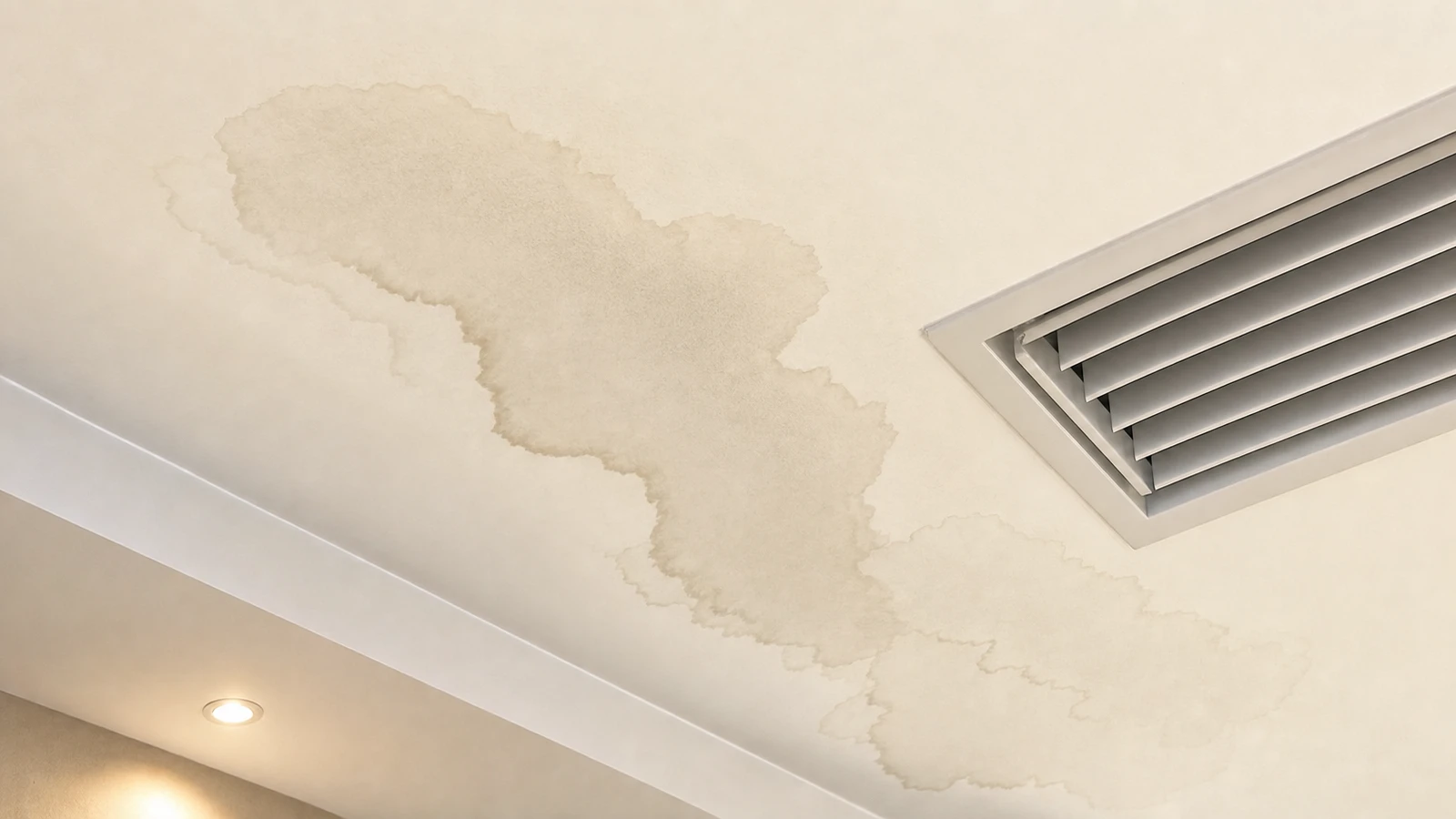
If water is dripping from your ceiling, first check if it’s the air conditioning or the roof at fault. Timing with rain, the spot relative to the AC unit, and water clarity are your first clues.
Timing: Rainfall vs. Dry Days
To determine whether your ceiling’s water leakage is due to a roof problem or AC condensation, start by observing the timing of the leakage. If you notice water spots appearing during or shortly after rainfall, it’s likely a roof issue. Roofs in Dubai, designed primarily for sun, can develop cracks over time. Rainfall, although rare, with about 68mm a year over just 12 to 13 days, can exploit these vulnerabilities, leading to leakage.
On the other hand, if the water appears during dry spells, it’s more likely related to your air conditioning system. AC units in Dubai run extensively due to high temperatures, leading to condensation. This condensation generally occurs even when there’s no rain. Check for drips during the dry season, as this often indicates AC condensation rather than a roof problem.
- Rainfall timing. If water spots coincide with rain, suspect a roof leakage. Dubai roofs weren’t built for frequent rain, so even a minor downpour can exploit weaknesses.
- Dry spell drips. Continuous water spots during dry weather suggest AC condensation. This is common in Dubai, where ACs work overtime and condensation is a frequent side effect.
Understanding the timing of the leakage helps differentiate between a roof and AC issue. For a more detailed exploration of these issues, including additional causes of water stains, you can check our guide on ceiling water stains in Dubai.
In summary, the climate in Dubai plays a crucial role in diagnosing the source of a leakage. Rain is infrequent, so a leak aligning with rainfall hints at roof problems. In contrast, a dry-season drip often points to AC condensation. Properly identifying the timing of the leakage is a key step in determining the right solution.
Position: Near the AC Unit or Elsewhere?
The location of water leakage in your home can offer crucial clues about its source. If you notice water stains or damp patches directly under or close to your air conditioning unit, the culprit is often AC condensation. This condition arises when the AC unit generates excess moisture that fails to drain properly. In Dubai’s hot climate, air conditioners run almost continuously, making condensation issues quite common.
An AC unit typically has a drain line or pipe designed to remove the moisture it extracts from the air. However, if this line becomes blocked or disconnected, the water has nowhere to go but down, into your ceiling or walls, leading to damp spots and stains. This often occurs right below the AC unit or along the path of the drain line. If your leakage is found in this specific area, it’s a strong indicator that the AC system might be the issue.
- Check proximity to the AC unit. If the leakage is directly below the AC unit or its drain line, AC condensation is a likely cause. This is particularly true if there is no recent rainfall to account for the water.
- Observe the size and spread. Water from AC condensation usually produces smaller, more concentrated damp patches compared to rain-induced leaks, which can spread widely if the roof membrane is compromised.
- Inspect the drain line. Look for blockages or disconnections in the AC drain line. A blocked line means water backs up and spills out, often right where the line runs.
While positioning provides valuable hints, it’s important to consider other factors to accurately diagnose the issue. If you find water leakage far from any AC unit, or if it appears after heavy rains, the problem might lie with your roof’s waterproofing. Employing a professional inspection can help clarify the source and recommend the right solution. Whether it’s a simple block in the drain line or a more complex roofing issue, addressing it promptly will prevent further damage.
Water Clarity: Clear or Stained?
When you notice water dripping from your ceiling, the clarity of the water can be a telling clue. Clear water often indicates AC condensation, while stained or dirty water usually points to a roof-related issue. Understanding this difference can help you diagnose the problem quickly and accurately.
- Clear water: AC condensation. If the water dripping is clear and has no odour, it’s likely from your air conditioning system. This can happen when the AC unit’s drain line becomes clogged or misaligned, causing the condensate to overflow. Since AC units work year-round in Dubai, this issue might not be seasonal. Inspect the AC unit and its drain pan for any visible blockages or misalignments.
- Stained or dirty water: Roof leakage. On the other hand, water with a brownish or yellowish tint often suggests a roof problem. The discolouration comes from dirt, debris, or rust that water picks up as it seeps through the roof structure. This type of leakage often coincides with rainfall, which can exacerbate existing cracks or weak spots in the roof’s waterproof membrane.
Knowing the source of the leakage is crucial because it determines the necessary repair approach. AC condensation issues are generally solved by clearing the drain line or adjusting the AC unit. Roof leakages, however, often require a more comprehensive repair. This might include patching the membrane, addressing structural weaknesses, or even a full roof inspection to diagnose additional vulnerabilities.
To test the water clarity yourself, carefully collect a sample of the leaking water using a clear container. Compare the colour and any sediment present. If the water is clear and odourless, the issue likely lies with your AC system. If it’s stained, a roof issue is more probable. If you’re uncertain, consider scheduling a free roof inspection with a professional to get a thorough assessment of the condition of your roof and identify the true cause of the leakage.
The Dry-Season Test
When you’re dealing with a water stain on your ceiling, knowing whether it’s a roof issue or something else is crucial. The dry-season test can help you determine if the leakage is due to rain or another source, like your air conditioning system.
Start by observing the leak during a period of dry weather. Dubai’s climate, with its long stretches of sunny days, offers the perfect conditions for this test. If the stain worsens or new water appears when there’s no rain, it’s unlikely your roof is the culprit.
During the dry spell, keep an eye on when and where the water shows up. If it’s near your AC unit or its drain line, condensation could be the issue. Air conditioners produce water as a byproduct of cooling, and if the drain is blocked or misaligned, it might overflow, causing water to seep into your ceiling.
Check the water’s clarity too. Rainwater tends to bring in dust and debris, appearing stained or murky. Condensation from an AC unit is usually clear. Using a white cloth or paper towel to dab the wet area can help you see the water’s colour more clearly.
To further confirm, you might want to run your AC continuously during this dry period. If the water leakage increases, it strongly suggests that the AC is the source. Conversely, if the leak remains unchanged or stops, the problem may lie elsewhere.
Finally, once you’re sure the roof isn’t the issue, arrange for a professional AC inspection to address any potential drainage problems. On the flip side, if the dry-season test points towards the roof, a thorough inspection by a professional roofing contractor, like Shield Edge, can pinpoint any issues and suggest a solution.
To solve your ceiling leakage, determine whether it’s from the AC or the roof. Use these clues to narrow it down, and avoid unnecessary repairs.
For a precise diagnosis, consider a free inspection with Shield Edge. Book via WhatsApp or our Request an Inspection page.
If it does turn out to be the roof, our pricing page sets out what the work costs.