
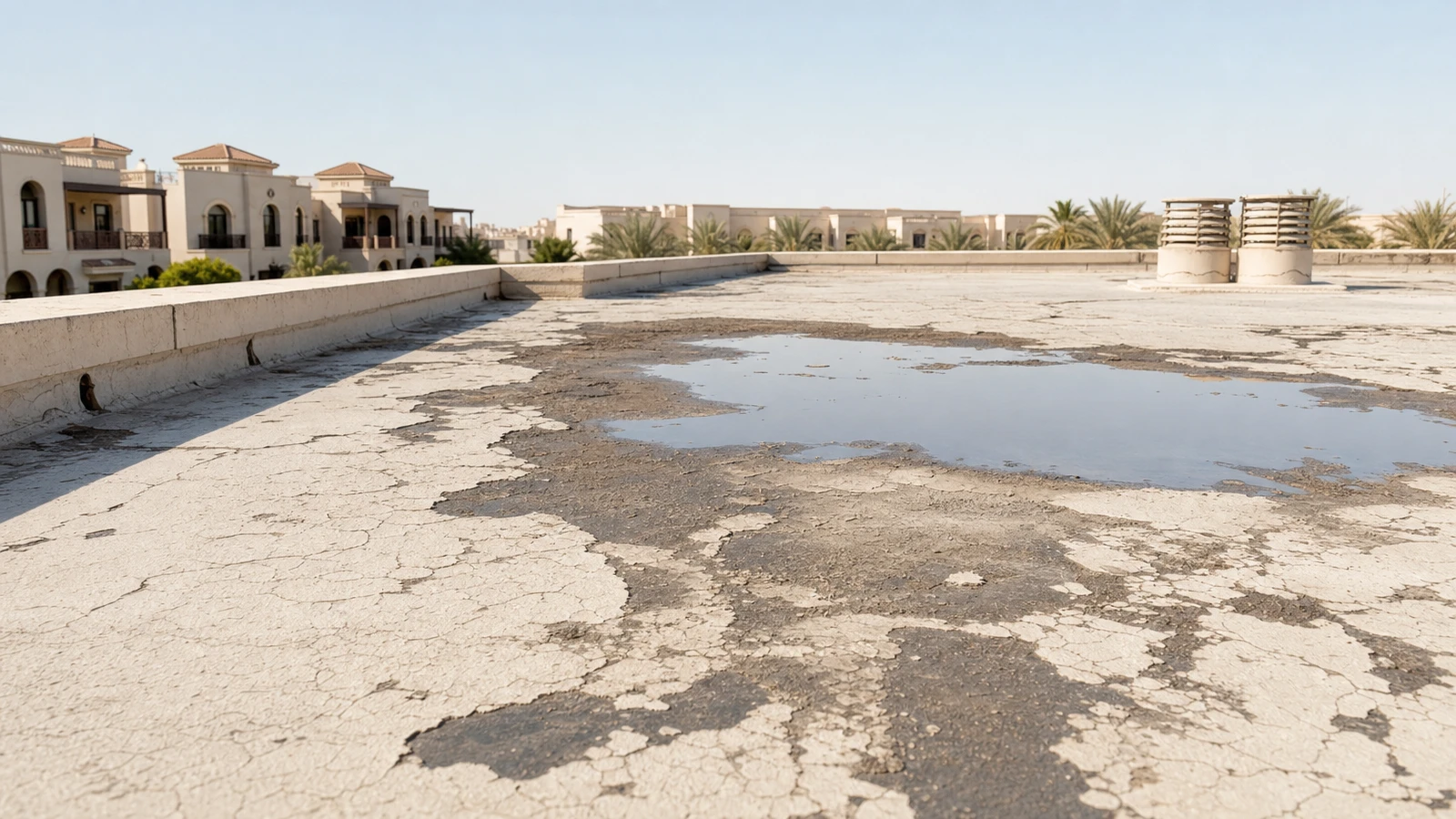
Roof repairs in Dubai often fail due to poor preparation, wrong material choice for standing water, insufficient coating thickness, lack of detail at edges and pipes, and rushed drying times between coats.
The Importance of Proper Roof Preparation
Proper preparation is the backbone of any successful roof repair. Skipping this step is like building a house on sand. The roof must be thoroughly cleaned and all cracks repaired before any coating is applied. Unfortunately, in Dubai, this crucial step is often the first to be skipped in budget repairs.
Why does preparation matter so much? Because dirt, debris, and existing damage undermine the new waterproofing system. Imagine trying to stick tape onto a dusty surface. It may hold for a while, but not when it really matters. A clean surface ensures the coating bonds properly, providing a solid barrier against water. Cracks, if not addressed, become entry points for water, leading to leaks that will undo any repair work.
Preparation involves a few critical steps. First, the roof must be swept and washed to remove all loose debris and dust. This might seem basic, but it is crucial for ensuring the new coating adheres correctly. Next, any existing damage, such as cracks or blisters, needs to be repaired. If these are ignored, water will find its way in, regardless of the quality of the new coating.
- Skipped cleaning. Without a clean surface, the new waterproof layer fails to bond, leading to premature failure.
- Ignored cracks. Unrepaired cracks allow water to seep under the membrane, causing leakage issues that the repair was meant to solve.
- Cost-cutting shortcuts. In many cheap jobs, preparation is the first corner cut to save time and money, often at the expense of durability.
It’s a common pattern we see in the industry. Contractors eager to offer the lowest bid often reduce the time spent on preparation. This approach might save money upfront but costs more in the long run when repairs fail, and the roof needs attention again.
Shield Edge’s approach is different. Our inspections, detailed in our guide on avoiding common waterproofing mistakes, focus on diagnosing and addressing every aspect of the roof’s condition. We believe in fixing the root cause, not just the symptoms. This includes thorough preparation, ensuring that every repair we perform is built to last.
In the harsh Dubai climate, where roofs endure both searing heat and occasional heavy rain, proper preparation isn’t just essential, it’s non-negotiable. Cutting corners here is a false economy that inevitably leads to repeat failures. Investing time in preparation ensures that the repair work can withstand the elements and provide long-lasting protection.
Choosing the Right System for Standing Water
Dubai’s climate demands a waterproofing system that can withstand standing water. The heat here pushes roof surfaces past 45°C, but when the rain falls, it finds every flaw. Selecting a system that handles standing water is not just a preference; it’s essential to prevent early failure.
Water on a flat roof doesn’t always drain away immediately. Poor drains or slight dips can cause puddles that sit for days. This standing water is the real test of your waterproofing. If the system isn’t up to it, water will seep through, damaging the roof and interiors.
Silicone coatings are our preferred choice for Dubai’s flat roofs. They remain flexible under heat stress and cope well with puddles. This resilience makes them ideal for most residential roofs in the region, despite their higher cost. They bond best on a clean surface, so preparation is key.
In contrast, acrylic coatings, while cheaper, are often a poor fit for Dubai’s conditions. They reflect heat well, which is why they’re popular. But they crack under sustained UV exposure, leading to water seepage. Over time, even minor cracks allow water to enter, causing leaks.
Using the wrong system is a common mistake that leads to early failure. Acrylics, when exposed to standing water, fail faster than expected. The water seeps in through cracks, and the repair cycle starts all over again. This issue is costly and frustrating for homeowners.
Polyurethane is another option. It’s tough and handles foot traffic well. However, it’s usually overkill for villas, being more suited to commercial roofs. Its cost doesn’t justify its use in most residential settings where standing water is the main concern.
The solution lies in matching the roof’s needs with the right system. A thorough inspection will reveal the roof’s condition and drainage capabilities. If standing water is likely, investing in a silicone system makes sense. It might cost more upfront, but it saves in the long run.
The right waterproofing system can mean the difference between a roof that lasts and one that requires frequent repairs. Choosing wisely protects against water damage, saves money, and offers peace of mind in Dubai’s challenging climate. Our free inspection will help you make the right choice.
The Consequence of Thin Application
Applying a roof coating too thinly is a common mistake that can severely compromise the roof’s durability and weather resistance. A thinly applied coating simply doesn’t have the physical thickness required to act as an effective barrier against water, heat, and other environmental factors. This oversight can lead directly to premature failure, resulting in leaks and the need for costly repairs far sooner than anticipated.
When a coating is applied too thinly, it lacks the necessary thickness to withstand the harsh weather conditions typical in Dubai. The intense UV radiation and high temperatures can cause a thin layer to degrade much faster than a properly applied one. This degradation often manifests as cracking or peeling, which compromises the roof’s ability to repel water effectively. Once water starts seeping through these cracks, the underlying materials are at risk, leading to significant damage over time.
Additionally, thin applications often result in an uneven surface. This unevenness can create low spots where water can collect, leading to ponding. Over time, these areas of standing water can exacerbate the deterioration of the coating, further increasing the risk of water ingress and roof leakage. For more insight into how these issues arise and their implications, you can refer to the causes of roof leaks in Dubai.
The protection offered by a roof coating relies heavily on its thickness. Manufacturers specify a minimum thickness for a reason: it ensures the coating performs as intended, providing a robust, flexible barrier that can expand and contract with temperature changes without cracking. A thin application doesn’t meet these specifications, leaving the roof vulnerable to the elements.
Moreover, a thinly applied coating may not fully cover the entire roof surface, leading to areas where the substrate is exposed. These exposed spots are weak points where water can penetrate, leading to the same kinds of problems that the coating was meant to prevent. This is particularly concerning around roof penetrations like pipes and vents, where improper coverage can lead to significant leaks.
In summary, the consequence of a thin application is a compromised roof. It fails to deliver the intended protection, leaving the structure susceptible to damage from UV radiation, rain, and the harsh climate. Ensuring a proper application thickness is critical to maintaining the roof’s integrity and avoiding the costly cycle of repairs.
Detail Work at Edges and Around Pipes
Roof edges, pipes, and other penetrations are frequent culprits behind water leakage. These parts of the roof are prone to seepage if not meticulously sealed. Water finds its way into any gap, and minor openings can lead to significant problems down the line.
The low wall running around the edge of the roof, called the parapet, is particularly vulnerable. Water can pool up against it, especially during heavy rain. If the sealant here is compromised or missing, water can get under the roofing system. This is why attention to detail is crucial during installation or repair work.
- Pipes and penetrations. Pipes and other roof penetrations, such as cables and AC units, are necessary fixtures but create opportunities for leaks. A proper seal around these is essential. This involves using suitable materials that can withstand Dubai’s extreme weather conditions.
- Flashing detail. Flashing is the material that seals the joint between the roof and these penetrations. If the flashing isn’t properly installed or maintained, water can seep through. The seal must be tight and continuous, and any gaps should be promptly addressed.
- Edge sealing. The edges of the roof, where the roofing material meets the parapet, are another area where details matter. Sealants or membranes should overlap with no breaks, ensuring a watertight barrier. Even a small oversight can become a pathway for water.
Neglecting these areas during roof work leads to common points of leakage. Water tends not to travel straight down; it seeks out the path of least resistance. This means that even a well-sealed flat expanse of roof won’t protect against leakage if the edges and penetrations are not equally well-tended. As the water seeps through, it can travel under the roof surface, showing up in unexpected places inside the property.
For a reliable repair that stands the test of time, the details at the edges and around penetrations need to be right. Use quality materials, take the time to get the seals perfect, and don’t cut corners on detail work. This commitment to thorough, careful work reduces the risk of future problems and ensures the roof serves its purpose effectively.
The Role of Drying Time Between Coats
Allowing proper drying time between coats is crucial for the success of roof repairs in Dubai. This step is often rushed, leading to early failures. When each layer isn’t allowed to fully cure, the coating’s integrity is compromised, resulting in poor adhesion and reduced lifespan.
Skipping adequate drying time is a common mistake. Contractors often rush the process to save time or cut costs. However, this shortcut can lead to long-term issues, including water seepage and membrane failure. Each coat needs time to bond properly to the surface and the layer beneath it. Without this, the entire system is weakened, making it more susceptible to damage.
- The chemistry of curing. Coatings need time to cure, which is a chemical process that strengthens the material. This curing ensures that each layer adheres correctly, forming a solid barrier against water infiltration.
- Environmental conditions. Dubai’s climate can complicate this process. High temperatures can cause coatings to dry too quickly on the surface while remaining uncured underneath. This false sense of readiness often leads contractors to apply the next coat too soon.
- Impact of humidity. Humidity levels also play a role. High humidity can slow down the drying process, needing more patience from contractors. Rushing the job in these conditions increases the risk of incomplete curing.
Contractors should check the manufacturer’s guidelines for drying times, which often specify the conditions needed for optimal curing. Ignoring these guidelines can lead to premature failure, with issues surfacing months after the work is completed. A poorly adhered coating can develop cracks, allowing water to penetrate and cause damage.
Adhering to proper drying times is not just a matter of following instructions; it’s essential for ensuring the durability of the roof repair. In the long run, taking the time to let each layer cure properly can save on extensive repairs and additional costs.
At Shield Edge, we emphasise the importance of allowing each coat to dry fully before applying the next. By following this practice, we ensure that our repairs last, providing peace of mind to homeowners throughout Dubai. If you’re facing recurring issues with your roof, consider whether rushed drying times might be the cause. A thorough inspection can provide the answers you need.
Common Misjudgments in Roof Repairs
Misjudging roof conditions can lead to repairs that don’t hold up. The errors often start with misunderstandings about the roof’s real state and what it needs. Let’s look at where these assessments go off track and what happens next.
- Overlooking the root cause. A common mistake is to patch a visible issue without finding out where it began. For instance, sealing a ceiling stain without tracing the entry point of water means the leakage will likely return. Water travels under the surface, making the actual source hard to spot without a thorough inspection.
- Mistaking surface damage for deeper issues. Not all cracks or stains mean a major failure. Sometimes, they are surface damage that doesn’t compromise the roof’s integrity. Misjudging this can lead to unnecessary full-scale repairs when simple patching would suffice. This is why a detailed inspection is crucial before deciding on the repair strategy.
- Ignoring the existing roof system. Each roof has its own materials and construction. Applying a repair method that isn’t compatible with what’s already there can cause more harm than good. For instance, using a non-breathable coating on a roof designed to allow moisture to escape can trap water, leading to more damage.
- Underestimating weather impacts. Dubai’s climate puts unique demands on roofs. Repairs that don’t consider the extreme heat and occasional heavy rainfall won’t last. For example, using materials that can’t handle the intense sun can lead to rapid deterioration and early failure.
- Neglecting to assess drainage paths. Water should flow off the roof efficiently. If a repair doesn’t take the roof’s drainage system into account, it can cause ponding, where water collects in low spots. This can lead to leaks and stress on the roof structure over time.
- Failing to account for thermal expansion. Roofs expand and contract with temperature changes. Repairs that don’t allow for this movement can crack or peel away. Using materials that remain flexible and applying them correctly helps accommodate this natural shifting.
- Relying solely on visual checks. Many problems are not visible to the naked eye. Moisture meters and thermal cameras can reveal hidden issues. Skipping these tools can mean missing critical signs that the repair approach needs to address.
These misjudgments turn into costly mistakes. Ensuring a repair holds requires understanding the roof’s specific needs and conditions. That’s why an expert inspection is the first step towards a lasting solution.
How to Avoid Repeat Roof Repair Failures
To ensure your roof repairs don’t fail again, you need to select the right contractor and understand the essentials of a good repair job. Here’s how you can avoid common pitfalls and keep your roof in top shape.
- Choose a reputable contractor. Not all contractors are equal. Look for firms with a proven track record in Dubai, like Shield Edge, who provide comprehensive inspections and detailed reports. Verify their licence and check reviews from other homeowners in your area. Ask for itemised pricing to see exactly what you’re paying for.
- Understand the repair process. A good contractor will explain the repair steps clearly. They should talk you through the preparation work, the materials they plan to use, and why those choices suit your roof. For example, silicone coatings are ideal for flat roofs in Dubai because they handle standing water and heat cycles well.
- Insist on proper preparation. Most repair failures come from skipping preparation. Ensure the contractor cleans the roof thoroughly and addresses any existing cracks before applying new materials. This sets a solid foundation for long-lasting repairs.
- Check the application thickness. Ask your contractor about the recommended thickness for the materials used. Thin applications often lead to early failures, so it’s crucial the coatings are applied at the right depth to withstand Dubai’s harsh climate.
- Ensure detail work is done. Repairs must include meticulous work around edges, pipes, and any roof penetrations. This is where leaks often start, so attention to these areas is non-negotiable.
- Verify drying times. Each coat of material needs ample drying time before the next is applied. Rushing this step can trap moisture, leading to future issues. Confirm that your contractor allows each layer to dry properly.
- Schedule regular maintenance. Even the best repairs benefit from regular check-ups. Consider an annual maintenance plan to catch any potential issues early. Shield Edge offers such plans, which include visual inspections to ensure your roof remains in good condition.
- Stay informed about your warranty. Understand the warranty terms provided by your contractor. Shield Edge, for instance, offers a 10-year workmanship warranty on waterproofing, which provides peace of mind but requires annual check-ins to stay valid.
- Monitor after heavy weather. Dubai’s rare but intense rainfalls can test any roof. After such events, inspect your roof for any signs of seepage or damage, and contact your contractor if anything looks amiss.
By following these steps, you can ensure that your roof repairs are done right the first time, saving you time, money, and stress in the long run.
To ensure your roof stays watertight and durable, pay attention to these critical repair steps. If you’re unsure about your roof’s condition, consider getting a professional inspection.
Book a free inspection with us to get a clear, honest assessment of your roof’s needs.
What a properly specified job costs, rather than a patch that fails again, is on our pricing page.