
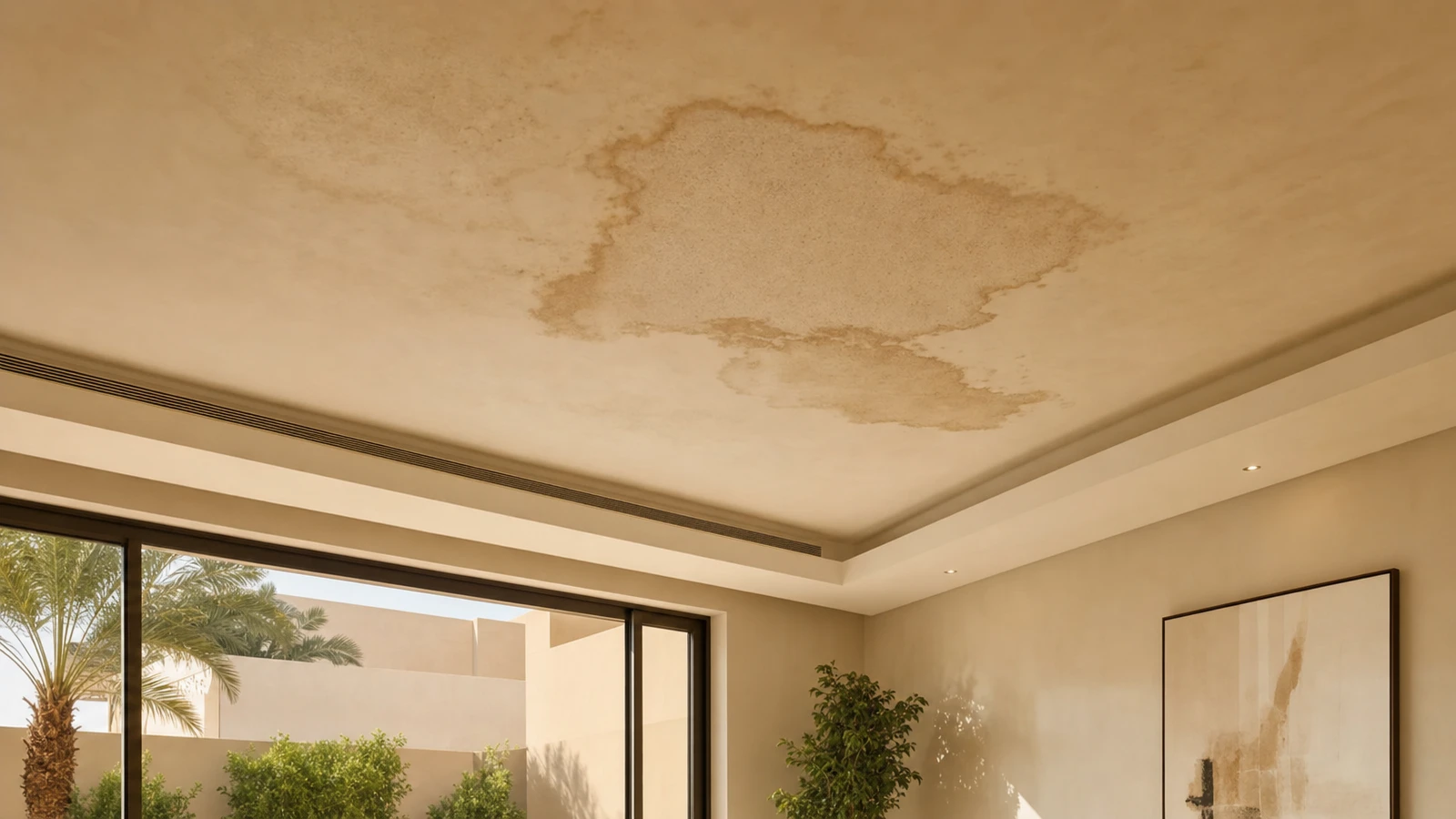
If you’ve spotted a water stain on your ceiling in Dubai, the cause could be one of four main issues: a roof membrane problem, AC condensate, plumbing leaks, or slab seepage from above. Identifying the right cause is crucial for effective repair.
Understanding Ceiling Water Stains
Water stains on your ceiling can be worrying, but they are often just the visible symptom of a deeper issue. Identifying the correct source is crucial, not only to fix the problem but also to prevent future damage. A water stain could be the result of several different issues, each requiring its own approach to repair. In Dubai, the most common culprits are problems with the roof membrane, AC condensate, plumbing leaks, and seepage from the slab above.
- Roof membrane issues. The roof membrane is designed to keep water out. However, if this barrier becomes compromised due to age, damage, or poor installation, water can seep through and eventually manifest as a stain on your ceiling. Membrane problems are a frequent cause of ceiling stains, especially given the challenges of Dubai’s intense sun and occasional heavy rainfalls.
- AC condensate. In Dubai’s hot climate, air conditioning systems run almost continuously, producing a lot of condensate. If the AC drain is clogged or improperly installed, this water can overflow and cause staining. It’s a surprisingly common issue that many homeowners overlook.
- Plumbing leaks. A hidden plumbing leak can be a mystery. Pipes running through ceilings or walls can develop leaks that might not immediately surface. Eventually, water finds its way to the ceiling, causing a stain. Unlike roof leaks, plumbing issues can appear as stains in unexpected areas, making them tricky to diagnose without professional help.
- Slab seepage from above. Sometimes, the water stain is due to seepage from above your ceiling slab. This occurs when water penetrates the upper floor’s slab, often from a poorly sealed balcony or terrace. This type of seepage can be particularly insidious, as water can travel quite a distance before it becomes visible.
Each of these issues requires a different solution, making it essential to correctly diagnose the cause of the water stain. For more detailed information on how to identify these causes, you can visit Shield Edge’s guide on roof leak causes in Dubai. Understanding the underlying problem not only helps in planning the right repair but also in preventing further damage, safeguarding your home from future water woes.
Roof Membrane Issues: The Common Culprit
When water stains appear on your ceiling, the roof membrane is often the suspect. This layer is meant to keep water out, but in Dubai’s climate, it can fall short. Roof membrane failure usually shows up as ceiling stains after rain. If your ceiling starts to show damp spots or discolouration soon after rainfall, there’s a good chance the membrane is compromised.
It’s not as simple as water coming straight through. Roof water does not drop directly down. Instead, it slips under the membrane, travelling between the roof surface and the membrane itself. This means that the stain on your ceiling might not be directly below the entry point. Water often enters at one place, runs along the roof structure, and emerges somewhere else entirely.
Several indicators suggest a roof membrane problem:
- Timing with rainfall. If ceiling stains appear or worsen after rain, suspect the roof. The stains might not be immediate; they could develop over a few hours or days as trapped water finds its path.
- Location relative to roof edges or penetrations. Stains near external walls, or below roof features like skylights or vents, often point to entry at these vulnerable spots. Water can seep through weak points around edges or where the roof membrane meets roof penetrations like pipes and cables.
- Multiple stains. Water may travel under the membrane and emerge in various places. This can create several stains at once, even if the water entered at a single point.
Addressing these issues begins with understanding the roof’s condition. A thorough roof inspection can identify where the membrane is failing. Shield Edge uses moisture meters and photographs each joint and penetration to pinpoint the problem’s origin. In some cases, a flood test might be necessary to see how water behaves on your roof.
Not every roof membrane issue demands a full replacement. Sometimes, spot repairs are enough to fix the problem. If the membrane is mostly sound, targeted patching can save you from the expense of a complete overhaul. However, if the roof surface has widespread damage or extensive cracking, a full recoat with a reliable silicone system may be the more effective solution. This is particularly important in Dubai, where roofs must withstand extreme temperatures and occasional heavy rains.
The Role of AC Condensate
AC condensate can mimic a roof leakage, especially in Dubai’s climate, where air conditioning systems work overtime to combat the intense heat. In many cases, water stains on ceilings are wrongly attributed to roof leaks when the actual source is condensate from air conditioning units. Understanding how this happens can save time and money, and help you make informed decisions about repairs.
The key to identifying whether AC condensate is the cause lies in examining the stain’s location and timing. Look for stains near air conditioning units or ducts, which are common culprits. AC units produce condensate as they cool the air, and this water needs to be effectively drained away. If the drainage pipes are blocked or improperly installed, the water can overflow and seep into ceilings, causing stains that resemble roof leaks.
Seasonal patterns also offer important clues. In Dubai, air conditioning units are heavily used during the hotter months, which aligns with the period when AC-related water stains are most likely to appear. If the stain worsens or only occurs during these peak usage months, it strengthens the case for AC condensate as the source.
Sometimes, the problem is exacerbated by poor insulation or faulty installation. If the AC unit is not properly insulated, condensation can form on the unit itself and drip down, making it appear as though the roof is leaking. Similarly, if the installation is faulty, such as poorly sealed ductwork, it can lead to water leakage manifesting as ceiling stains.
Spotting these signs early can prevent unnecessary roof repairs. Before assuming a roof problem, check the AC unit’s drainage system. Ensure the condensate line is clear and properly sloped to allow water to flow away. If you’re unsure, a professional inspection can confirm the source of the stain. Shield Edge offers free inspections that can help diagnose whether your stain is due to AC condensate or another issue.
- Proximity to AC units: Stains near air conditioning units or ducts often point to condensate issues.
- Seasonal appearance: Stains appearing in hotter months are likely linked to increased AC use.
- Check drainage: Ensure AC condensate lines are clear and correctly installed to prevent overflow.
Remember, AC condensate issues can mimic roof leaks, but they often have more straightforward solutions. Addressing these can save you from unnecessary expenses and stress. If in doubt, seek a professional assessment to distinguish between a roof problem and an AC issue.
Plumbing Leaks: A Hidden Threat
Plumbing leaks are often the silent culprits behind water stains on ceilings. These can stem from leaking pipes, faulty fittings, or even joint failures. Unlike roof membrane issues which might be tied to weather, plumbing leaks can persist regardless of rain, making them a year-round concern.
- Water clarity and consistency. Plumbing leaks often result in clearer water stains compared to those from the roof or slab seepage. These stains may also appear without any recent rainfall, providing a clue that the source is unrelated to external weather conditions.
- Persistent damp spots. If your ceiling shows damp patches that do not dry out over time, it suggests a continuous water source. Plumbing leaks can cause this because water flow from a pipe can be constant, unlike intermittent rain.
- Unusual water bills. A sudden increase in your water bill without changes in your usage can indicate a hidden plumbing leak. This is particularly true if the leakage is substantial, as it leads to increased water consumption that is billed to you.
- Localised mould growth. Mould loves moisture. If you notice mould forming in specific areas of your ceiling, it might be fed by a hidden plumbing leak. This growth can occur when leaks are not addressed promptly, worsening the problem.
- Changes in water pressure. A drop in water pressure could be a sign of a leak somewhere in your plumbing system. If this coincides with a ceiling stain, it strengthens the likelihood of a plumbing issue being the cause.
Identifying a plumbing leak involves a bit of detective work. Look for these signs and consider the behaviour of the water stain. If the stain appears to be linked to internal plumbing rather than external factors, it is crucial to address it quickly. Continuous leakage can lead to more severe structural damage and, over time, escalate repair costs. If in doubt, a professional inspection can confirm the issue and provide a solution tailored to the specific problem.
Slab Seepage: Water from Above
Slab seepage occurs when water penetrates through the slab from above, leading to damp patches on your ceiling. This problem is especially common in environments like Dubai, where roofs might not be adequately sealed for the rare, but intense, rainfall events. The water can travel through the slab, taking advantage of any cracks or weak points, and emerge as a damp spot on your ceiling.
One common scenario for slab seepage is after heavy rain. Although Dubai only experiences about 12 to 13 rainy days annually, the roofs and drainage systems often aren’t designed to handle even this limited amount of water effectively. When rainwater accumulates, it can find its way through any gaps or imperfections in the roof’s waterproofing system, seeping into the slab below. Once the water gets into the slab, it can travel horizontally, appearing as a damp patch on the ceiling below, sometimes far from the actual entry point.
Another situation where slab seepage might occur is if the roof above isn’t properly sealed. This could be due to deteriorated waterproofing materials or damage caused by foot traffic, equipment, or renovations. If the roof lacks a robust waterproofing membrane, a protective layer that prevents water ingress, water can easily penetrate the slab. Even small breaches in the membrane can allow significant water entry, leading to seepage and ceiling dampness.
In some cases, slab seepage is exacerbated by the construction of the building itself. Buildings in Dubai are primarily designed for the heat, not the rain, which means that any existing cracks or gaps in the slab can become pathways for water. This is why a thorough inspection of the roof and slab is crucial, especially after an unexpected downpour.
- Heavy Rainfall. Dubai’s rare heavy rains highlight any weaknesses in roof sealing. Water can seep through cracks in the slab, causing damp patches below.
- Inadequate Waterproofing. If the roof’s waterproofing membrane is compromised, water can penetrate the slab, leading to seepage.
- Construction Weaknesses. Cracks and gaps in slabs, common in heat-focused construction, can become seepage channels when it rains.
Addressing slab seepage involves identifying and repairing the source of the water ingress. This typically means reinforcing the roof’s waterproofing system and ensuring there are no cracks or gaps for water to exploit. Regular maintenance and inspections can help prevent such issues, ensuring your roof is ready to handle Dubai’s sporadic but intense rainfall.
Decision Tree: Finding the Real Cause
Ceiling stains can be tricky, but with a methodical approach, you can often pinpoint the cause without needing to dive into every possibility at once. Here’s a simple decision tree to guide you through the process:
- Check the timing. Ask yourself when the stain appears. If the stain grows during or immediately after rain, it’s likely linked to the roof. Dubai roofs are built for sun, not rain, so even a small amount of water can find its way into existing cracks.
- Inspect the location. Stains directly below air conditioning units often point to condensate issues. Check if the AC is running improperly or if there’s any blockage in the condensate drain line. Condensate issues are common due to Dubai’s high temperatures, where ACs work hard and can easily develop blockages.
- Assess the pattern. A stain that changes position or size without any obvious pattern might indicate plumbing problems. Water from a pipe can travel along unexpected paths before surfacing. Check for plumbing issues if water appears suddenly in different rooms, like in our verified case study where a broken roof pipe was the culprit.
- Look for recurring dampness. If a stain returns despite previous repairs, consider the possibility of slab seepage. This occurs when water travels across the slab from above, often requiring specialised detection methods to trace the entry point effectively.
- Consider recent work or changes. If recent renovations or changes have been made to the building, they might have accidentally affected the roof or plumbing. Any new installations or repairs can sometimes disrupt existing systems or sealants, leading to unexpected leakage points.
- Evaluate the severity. If water is pooling or dripping, it suggests an active and potentially severe issue, possibly requiring immediate attention. In such cases, a professional inspection is advisable to prevent further damage.
If these steps don’t clarify the source, or if the issue seems beyond a simple check, consider a professional inspection. Shield Edge offers free roof inspections, providing a thorough diagnosis without the pressure of a sales pitch. Getting an expert’s view can save time and prevent unnecessary repairs by identifying the real problem from the start.
What to Do Next
Once you’ve identified the cause of the water stain on your ceiling, it’s time to take action. The right steps depend on the source of the problem, and whether professional intervention is required. Let’s break down what you should do next.
- Roof membrane issues. If the stain is due to a compromised roof membrane, you need professional help. Shield Edge offers roof leak detection and repair services, focusing on finding the entry points and sealing them effectively. Given Dubai’s climate, a silicone coating is often recommended for its durability and ability to handle standing water.
- AC condensate. For water stains caused by AC condensate, start by checking the AC unit’s drainage line. If it’s clogged or damaged, it can often be resolved without professional help. However, if the issue persists, an AC technician should inspect the system to prevent further leakage.
- Plumbing leaks. A plumbing leak can be tricky, especially if it’s hidden behind walls or in ceiling cavities. If you suspect a plumbing issue, a professional plumber should be called in to trace and fix the leak. Shield Edge can assist in diagnosing roof-related plumbing problems, ensuring that the source is accurately identified.
- Slab seepage. Water seepage from slabs above can be challenging to address and usually requires a building professional to assess the structural integrity and waterproofing. This is often beyond a DIY fix, so professional assessment is crucial to prevent ongoing issues.
- Document and monitor. Regardless of the cause, document the issue with photos and notes. Monitor the affected area after repairs to ensure the problem doesn’t recur. This can be crucial if insurance claims or further interventions are needed.
For any roof-related issues, a free inspection from Shield Edge can provide clarity and a straightforward plan of action. Our comprehensive inspection includes moisture meter readings and detailed reports, allowing you to understand exactly what’s happening with your roof. This is not just a sales pitch; it’s a genuine offer to diagnose and advise, ensuring you make informed decisions.
If the problem seems minor and manageable, you might opt for a DIY approach. However, for more complex issues or if you’re unsure, professional help is the best route. Roof and plumbing problems can escalate quickly if not handled correctly, so it’s wise to use experts when needed.
To book a free inspection with Shield Edge, reach out via WhatsApp at +971 54 730 9500 or visit our website’s Request an Inspection page. We’ll provide a clear diagnosis and help you choose the most cost-effective solution for your roof problems.
Once you identify the cause of your ceiling stain, take action to prevent further damage. Ignoring the issue can lead to more serious problems.
Book a free inspection for a professional assessment and peace of mind.
If the roof does turn out to be the source, our pricing page sets out what putting it right costs.