
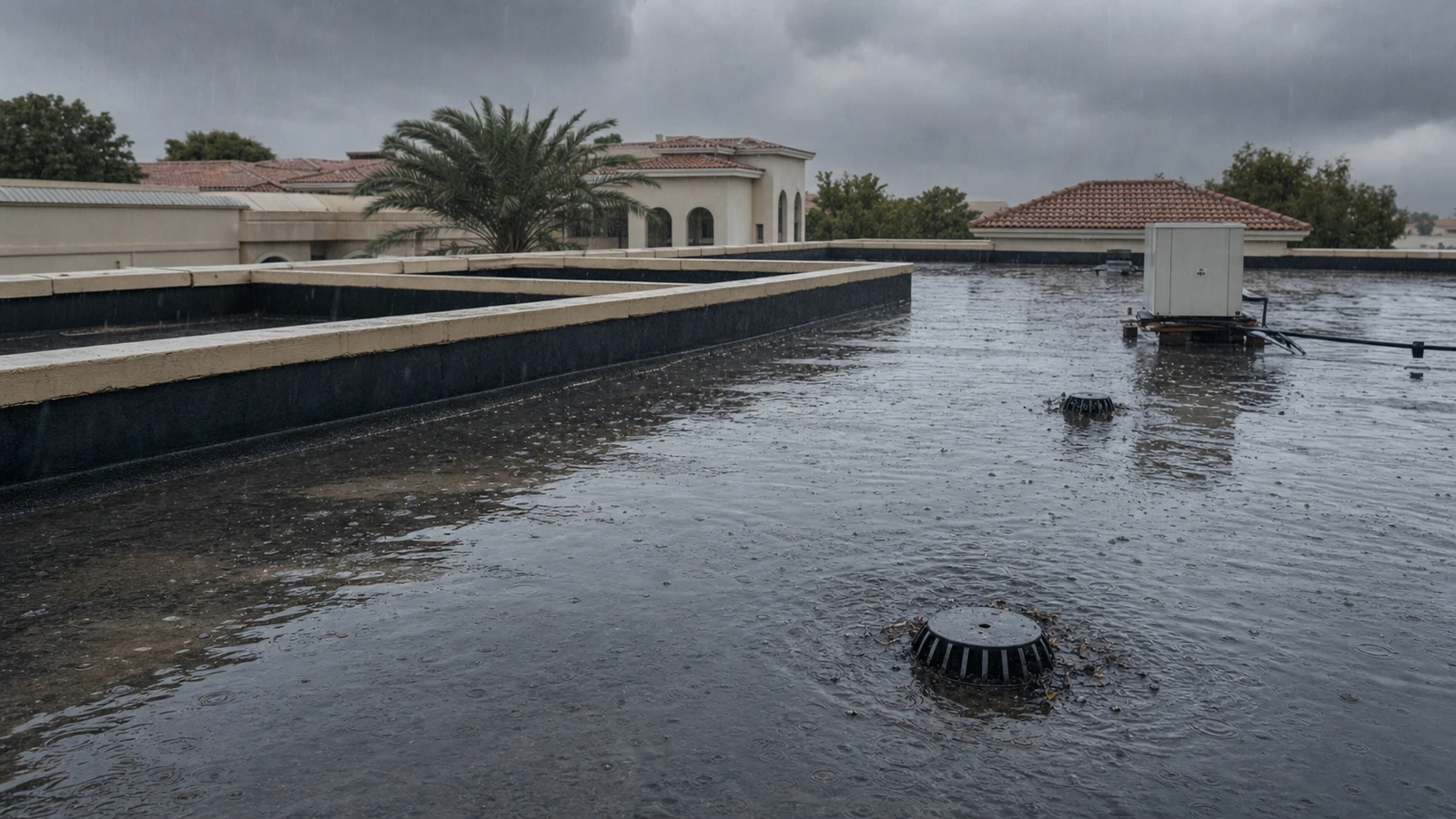
A roof leaking only during heavy rain in Dubai usually means the drainage system can’t handle sudden downpours, or there are weaknesses in the waterproofing that only show under pressure. Here’s why it happens and what to do about it.
Blocked or Undersized Drains
Dubai’s intense rainfall can overwhelm any drainage system that’s not up to the task. When those heavy showers hit, blocked or undersized drains lead to water pooling on the roof. This pooling can quickly turn a minor issue into a major one, especially if water rises above the level of your waterproofing.
One of the biggest culprits is sand. Dubai’s environment means sand and debris are a constant presence. These elements can accumulate over time, especially if regular maintenance is neglected. The result? Drains that should efficiently channel water off the roof become clogged, leaving water nowhere to go but onto vulnerable roof sections.
During a downpour, the first thing to check is whether water is flowing freely into the drains. If water is pooling, there might be visible blockages that you can clear immediately. Safety first, though. Only attempt to clear blockages if it’s safe to do so. Use a broom or stick to gently dislodge debris without damaging the roof surface.
Beyond the immediate fix, regular maintenance is crucial. A roof inspection can catch potential issues before they become problems. This includes checking for sand build-up and ensuring drains are clear and appropriately sized for the expected rainfall. An inspection isn’t just about addressing existing problems; it’s about preventing future ones.
- Clear visible blockages. If safe, use tools to remove debris during rainfall.
- Schedule regular maintenance. Routine checks prevent debris build-up and ensure proper drainage.
- Inspect drain capacity. Ensure your drains can handle heavy rain, considering Dubai’s unique weather patterns.
Ignoring these aspects can lead to water seepage into the structure, causing internal damage. Regular maintenance and inspections can mitigate these risks and ensure your roof is ready to handle even the heaviest of rains.
Waterproofing Limits and Overflows
In Dubai’s sporadic yet intense rainstorms, such as the April 2024 deluge that brought roughly 160mm in a single day, even a well-maintained roof can face challenges. Heavy rain can lead to water levels rising above the height of the waterproofing applied, resulting in leaks or seepage. This can happen when the rainwater accumulates faster than it can drain away, creating pressure on the roof’s weak spots.
The height and coverage of your waterproofing are crucial. Ideally, waterproofing should extend above the highest expected water level, including around the low wall running around the edge of the roof, known as the parapet. It is also essential around penetrations like pipes and cables. If the waterproofing doesn’t reach high enough, water can overflow and enter the roof structure, leading to leaks inside the building. This is often a hidden issue that only reveals itself during unusually heavy rainfall.
- Inspect parapets and penetrations. After a heavy storm, check these areas for signs of water ingress. Look for dampness, stains, or any visible damage to the waterproofing layer.
- Check for overflow marks. Evidence of watermarks on the parapet or near penetrations can indicate that water levels exceeded the waterproofing’s height.
- Evaluate waterproofing coverage. Ensure that the waterproofing membrane is intact and extends sufficiently in height around all critical areas to prevent future overflow issues.
Proper waterproofing height and coverage are not just about preventing leaks; they also protect the structural integrity of the building. If water repeatedly breaches the protective layer, it can lead to more severe issues over time, including damage to the roof structure itself. Regular inspections and maintenance are vital, especially after significant weather events. For a comprehensive understanding of other potential causes of roof leaks in Dubai, visit our detailed guide on roof leak causes.
Wind-Driven Rain and Weak Points
Wind-driven rain is a sneaky adversary for roofs. When gusts push rain horizontally, water finds its way into every nook and cranny. This is particularly true around poorly sealed edges and penetrations like pipes and vents. The wind forces rain into areas that gravity alone wouldn’t reach, making these weak points more vulnerable during a heavy storm.
Proper detailing and sealing are critical in preventing leakage from these weak points. Edges of the roof, where the surface meets the parapet walls, are prime areas for water entry if not sealed correctly. Similarly, penetrations, points where pipes and cables pass through the roof, require meticulous sealing. If the sealing is compromised, even slightly, wind-driven rain can infiltrate and cause seepage.
Hairline cracks can also serve as entry points for water, especially under sustained pressure. Although they might seem minor, these tiny fissures can expand and allow water to seep through. During heavy storms, the pressure from the wind and rain can force water through these cracks, resulting in leakage inside the home. This is why addressing hairline cracks before they become a problem is essential.
One common issue we notice is the underestimation of how much water can penetrate through these weak points during extreme weather. It’s not just about sealing; it’s about preparing the surface properly. The importance of this preparation is detailed further in our post on why roof repairs fail. It explains how inadequate preparation can lead to repeated failures, even if the sealing appears intact at first glance.
In Dubai’s climate, where heavy storms are infrequent but intense, ensuring that every edge and penetration is well-sealed is crucial. The low frequency of rain does not mean the risk is low, when it does rain, it can be torrential. This makes any oversight in detailing a potential problem. A thorough inspection and proper sealing can prevent water ingress and protect your home from the elements.
Action Steps After the Storm
After a heavy rainstorm, it’s crucial to act quickly to prevent further water damage to your home. Here’s a step-by-step guide to help you address potential problems and safeguard your roof before the next downpour.
- Check your drainage systems. Start by inspecting all drains and downspouts for blockages. Clear any debris such as leaves, dirt, or other materials that could impede water flow. Even partial blockages can cause water to back up during heavy rain.
- Inspect for visible damage. Look for any new signs of wear or damage on the roof surface, including cracks, blisters, or areas where the waterproof coating appears compromised. Pay special attention to low points where water might pond.
- Examine roof edges and walls. Check the low walls around the roof, often called parapets, for any signs of water ingress. Wind-driven rain can exploit any weak points here, so ensure that all joints and seals are intact.
- Review roof penetrations. Check around any pipes, cables, or air conditioning units that penetrate the roof for signs of leakage. These points are common culprits for water entry, especially if the sealant has degraded.
- Look inside for water stains. Inspect ceilings and upper walls inside your home for any new water stains or damp patches. These can indicate where water has entered. For further diagnostic help, consider reading our detailed guide on the causes of ceiling water stains in Dubai.
- Schedule a professional inspection. Even if you don’t find any visible damage, it’s wise to have a professional inspection. A trained eye can catch problems that might not be obvious to the untrained eye. This step is essential to ensure your roof’s integrity and longevity.
- Address issues promptly. If any issues are found, address them before the next rain. Delaying repairs can lead to more significant problems and costly damage. Consider a waterproofing or repair service to fix any identified issues.
Taking these steps after a storm can prevent minor issues from becoming major headaches. Regular maintenance and inspections are key to keeping your roof in top condition and avoiding unexpected water ingress and damage.
Heavy rain is a test for any roof. If you’ve noticed leaks, it’s crucial to act quickly to prevent further damage. Start with a thorough inspection and consider professional help for a lasting solution.
Book a free inspection with Shield Edge to get an expert assessment of your roof’s condition. Contact us via WhatsApp or visit our Request an Inspection page.